

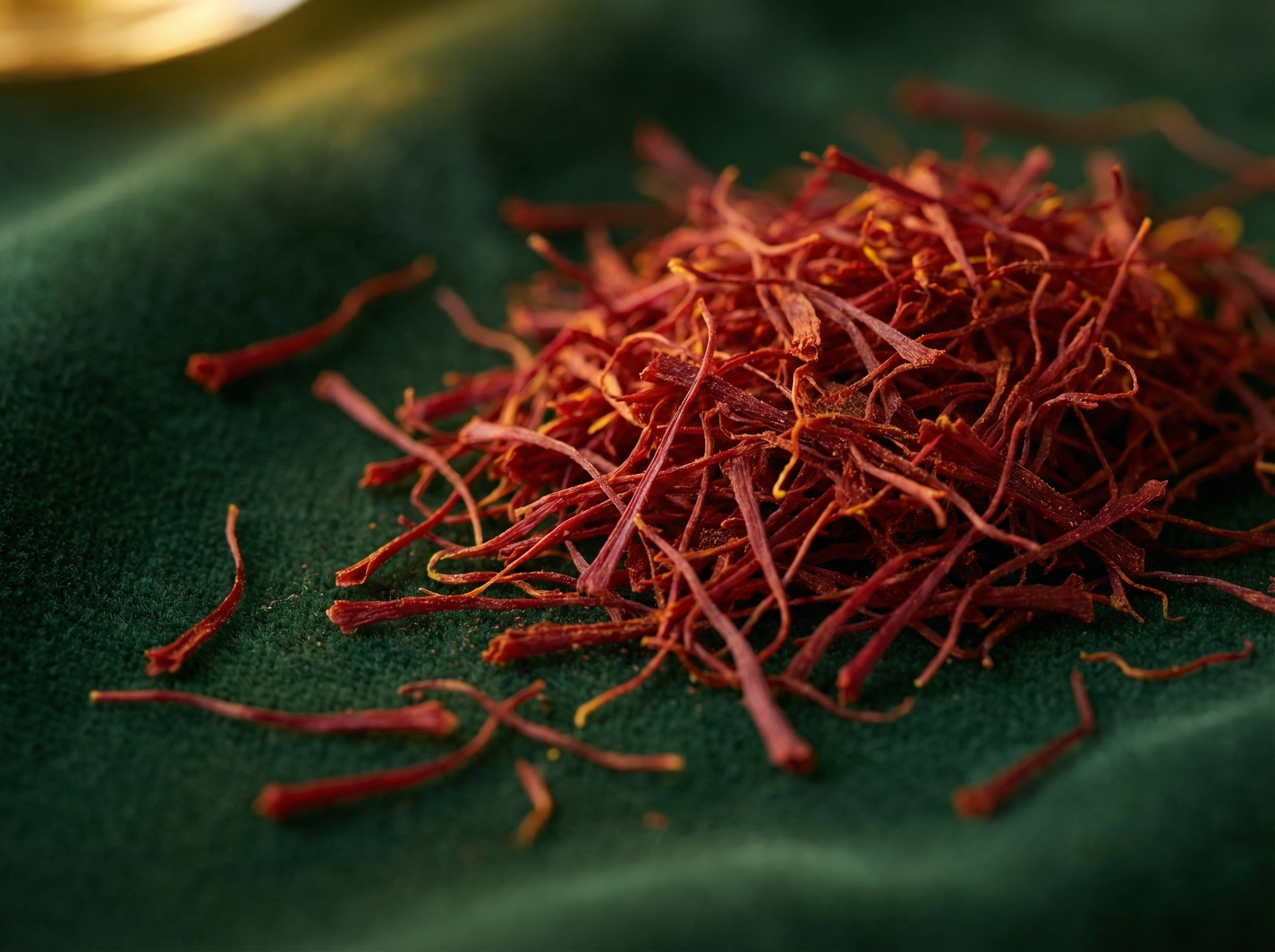

The Saffron
Research Summary.
We reviewed 76 peer-reviewed studies on saffron extract, cortisol, neuroinflammation, and stress-driven weight gain. Below is what the literature actually says — without the marketing language.
Strength scores reflect RCT quality, sample size, blinding, and replication across independent studies.
76 studies. One conclusion.
We searched PubMed, Cochrane, and Google Scholar for peer-reviewed studies on saffron extract (Crocus sativus L.), ashwagandha (Withania somnifera), cortisol regulation, neuroinflammation, and stress-driven weight gain published between 2000 and 2025. We prioritized randomized controlled trials (RCTs) with placebo arms, double-blinding, and standardized extract doses.
The conclusion across all 76 studies is consistent: saffron extract at clinical dose (specifically Affron® at 88.5mg) and ashwagandha at clinical dose (specifically KSM-66® at 300mg) produce measurable, reproducible reductions in cortisol, neuroinflammation, and stress-related symptoms. The dose matters. The extract standardization matters. Generic versions do not produce the same results.
"The evidence for saffron extract as a cortisol and neuroinflammation modulator is now strong enough that it should be considered a first-line intervention for stress-driven weight gain — ahead of most pharmaceutical options, which carry significantly higher side-effect profiles."
— Methodic Bio Clinical Review, 2026Three things the literature agrees on
Important limitations
Saffron Complete uses every compound at the exact dose used in the trials cited above.
Affron® 88.5mg · KSM-66® 300mg · Magnesium Glycinate 200mg · BioPerine® 5mg